CBSE Class 6 - Science - CH14 - Water
Q1: Fill up the blanks in the following:(a) The process of
changing of water into its vapour is called _________________.
(b) The
process of changing water vapour into water is called _________________.
(c)
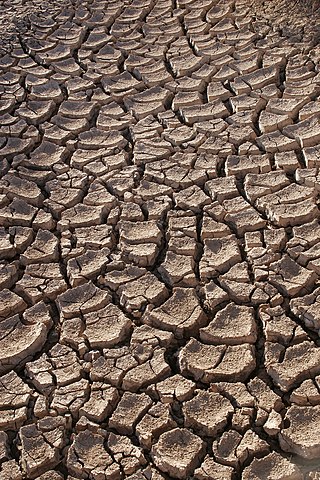
No rainfall for a year or more may lead to _________________ in that
region.
(d) Excessive rains may cause _________________.
(e) Water
disappears from wet clothes by the process of ___________________.
(f) In
winter mornings , __________is formed due to condensation of water vapour near
the ground.
(g) The major natural source of water is
_________________.
(h) Many tiny water droplets high up in the air, come
together and fall down as _____________, __________ and
___________.
Answer:
(a) evaporation
(b) condensation
(c) drought
(d)
flood
(e) evaporation
(f) fog
(g) oceans and sea
(h) rain, hail,
snow
Q2: State for each of the following whether it is due to
evaporation or condensation:
(a) Water drops appear on the outer
surface of a glass containing cold water.(b) Steam rising from wet clothes while
they are ironed.
(c) Fog appearing on a cold winter morning.
(d)
Blackboard dries up after wiping it.
(e) Steam rising from a hot girdle when
water is sprinkled on it.
Answer:
(a)
Water drops appear on the outer surface of a glass containing cold water. -
condensation
(b) Steam rising from wet
clothes while they are ironed. -
evaporation
(c) Fog appearing on a cold winter
morning. -
condensation
(d) Blackboard dries
up after wiping it. -
evaporation
(e) Steam
rising from a hot girdle when water is sprinkled on it. -
evaporation
Q3: Which of the
following statements are “true” ?
Answer:
(a) Water vapour is present in air only
during the monsoon. (
False ✗)
(b) Water
evaporates into air from oceans, rivers and lakes but not from the soil.(
False ✗)
(c) The process of water changing into
its vapour, is called evaporation.(
True
✓)
(d) The evaporation of water takes place only in sunlight.(
False ✗)
(e) Water vapour condenses to form
tiny droplets of water in the upper layers of air where it is cooler.(
True ✓)
(f) Life is possible on earth without
water (
False ✗)
(g) When water is heated,
it changes into ice. (
False ✗)
(h)
Evaporation of water takes place at all times. (
True ✓)
(i) Saline water is fit for drinking
and other domestic, agricultural and industrial needs. (
False ✗)
(j) About two-thirds of the earth is
covered with water. (
True
✓)
Q4: Suppose you want to dry your school uniform
quickly. Would spreading it near an anghiti or heater help? If yes,
how?
Answer: Yes, spreading school
uniform near anghiti or heater would help dry it quickly. Heater will warm up
the surroundings and increase the rate of evaporation. Therefore school uniform
will dry up quickly.
Q5: Take out a cooled bottle of water from
refrigerator and keep it on a table. After some time you notice a puddle of
water around it. Why?
Answer: It is
due to condensation of water vapours present in air. The cold surface of the
bottle cools the air around it, and the water vapour of the air condenses on its
surface.
Q6: To clean their spectacles, people often breathe out
on glasses to make them wet. Explain why the glasses become
wet.
Answer: When we breathe out,
moist air comes out which make the glasses wet. Also when we breathe out, we
release carbon-dioxide gas which cools the surroundings by absorbing heat from
air, thus condenses the water vapours.
Q7: How are clouds
formed?
Answer: Clouds are formed
due to the process of evaporation and condensation. When air moves up, it gets
cooler and cooler. At sufficient height, the air becomes so cool that water
vapours present in the air condense. They form tiny droplets and float in air as
clouds.
Q8:
When does a drought occur?
Answer:
When there is insufficient or no rainfall occurs for more than a year in a
region, the scarcity of water happens. Ponds and wells dry up. The soil
continues to lose water due to evaporation and transpiration and eventually dry.
This leads to drought.
Q9: What is rainwater harvesting? What are
the two rainwater harvesting techniques?
Answer: Collecting rain water and storing it for
later use is called rainwater harvesting. The two techniques of rainwater
harvesting are:
- Rooftop rainwater harvesting.
- Allowing water to into ground directly through roadside drains.
Q10: Explain Water cycle with diagram.
Answer: The continuous journey of water in nature
from earth to clouds and back to the earth is called water cycle. The water
cycle mainly consists of following processes:
- Evaporation and Transpiration
- Condensation
- Precipitation
- Accumulation
- When the sun heats up the water in rivers, ponds, oceans and lakes, it turns
water into vapours. Plants also lose water into air due to transpiration.
- At sufficient heights, the water vapours in the air cool down and condense
to form clouds
- Precipitation occurs when too much water vapours condense. The clouds become
heavy and begin to fall as rain, hail or snow.
- The water falls on the earth, it goes into lakes, oceans, rivers and ground.
Q11: Explain how floods causes extensive damage to human life
and property?
Answer:
- Droughts results in drying up of the crops and vegetation.
- Its leads to scarcity of food and fodder for humans and animal life.
- It leads to malnutrition in humans and animals.
Q12(MCQ): What do
we see on the surface of the glass containing ice-chilled water ?
(a)
dust
(b) water vapour
(c) water droplets
(d) ice
Answer: (c) water droplets
Q13(MCQ): Evaporation of water in shade
is
(a) fast
(b) faster
(c) slow
(d) none of
these
Answer: (b)
faster
Q14(MCQ): The process
of changing water into water vapours is called
(a) filtration
(b)
condensation
(c) evaporation
(d) sedimentation
Answer: (c) evaporation
Q15(MCQ): How much water is consumed by a
city-dweller in washing, bathing, flushing the toilet etc.?
(a) 2-3
litres
(b) 10-15 litres
(c) 100-300 litres
(d) 1000-1500
litres
Answer: (c) 100-300
litres
Q16(MCQ): If tap of
your bathroom is leaking drop by drop, how much water is lost per
day?
(a) 1 bucket full of water
(b) 2 buckets full of water
(c)
8 buckets full of water
(d) 20 buckets full of water
Answer: (c) 8 buckets full of water


 Q5: How will you show that air is dissolved in
water?
Q5: How will you show that air is dissolved in
water?